Deciphering the origin of developmental stability: The role of intracellular expression variability in evolutionary conservation
Evolution & Development (March 2024)

Hello, I am Masato Tsutsumi.
I am currently working as an Assistant Professor in the Mathematical Life Dynamics Project at the Life Science Center for Survival Dynamics, Tsukuba Advanced Research Alliance (TARA), University of Tsukuba.
I also hold a concurrent affiliation as a Visiting Researcher at the Data-Driven Biology Laboratory, Graduate School of Medicine, Nagoya University.
My research aims to treat life phenomena as a hierarchical system of morphology, psychology, and behavior and to quantify them as information. Specifically, I work on quantification of morphology using deep generative models, quantification of psychological state (e.g., social stress) using mathematical models, and quantitative analysis of behavior based on inter-individual interactions, with the goal of understanding universal principles that describe the state and dynamics of life.
Assistant Professor, 2025/12 -
Life Science Center for Survival Dynamics, Tsukuba Advanced Research Alliance (TARA), University of Tsukuba
(Mathematical Life Dynamics Project: Assoc. Prof. Nen Saito)
Visiting Researcher, 2025/12 -
Nagoya University Graduate School of Medicine
(Data-Driven Biology Laboratory: Prof. Naoki Honda)
Designated Assistant Professor, 2024/10 - 2025/11
Nagoya University Graduate School of Medicine
(Data-Driven Biology Laboratory: Prof. Naoki Honda)
Designated Researcher, 2023/10 - 2024/9
Hiroshima University Graduate School of Integrated Sciences for Life
(Data-Driven Biology Laboratory: Prof. Naoki Honda)
Doctor of Science, 2020/4 - 2023/9
Graduate School of Science, The University of Tokyo
(Supervisor: Prof. Chikara Furusawa)
Master of Science, 2018/4 - 2020/4
Graduate School of Science, The University of Tokyo
(Supervisor: Prof. Chikara Furusawa)
Bachelor of Science, 2014/4 - 2018/3
Department of Physics, Faculty of Science, The University of Tokyo
VAE, YOLO
Geometric morphometrics
Quantitative biology, EvoDevo
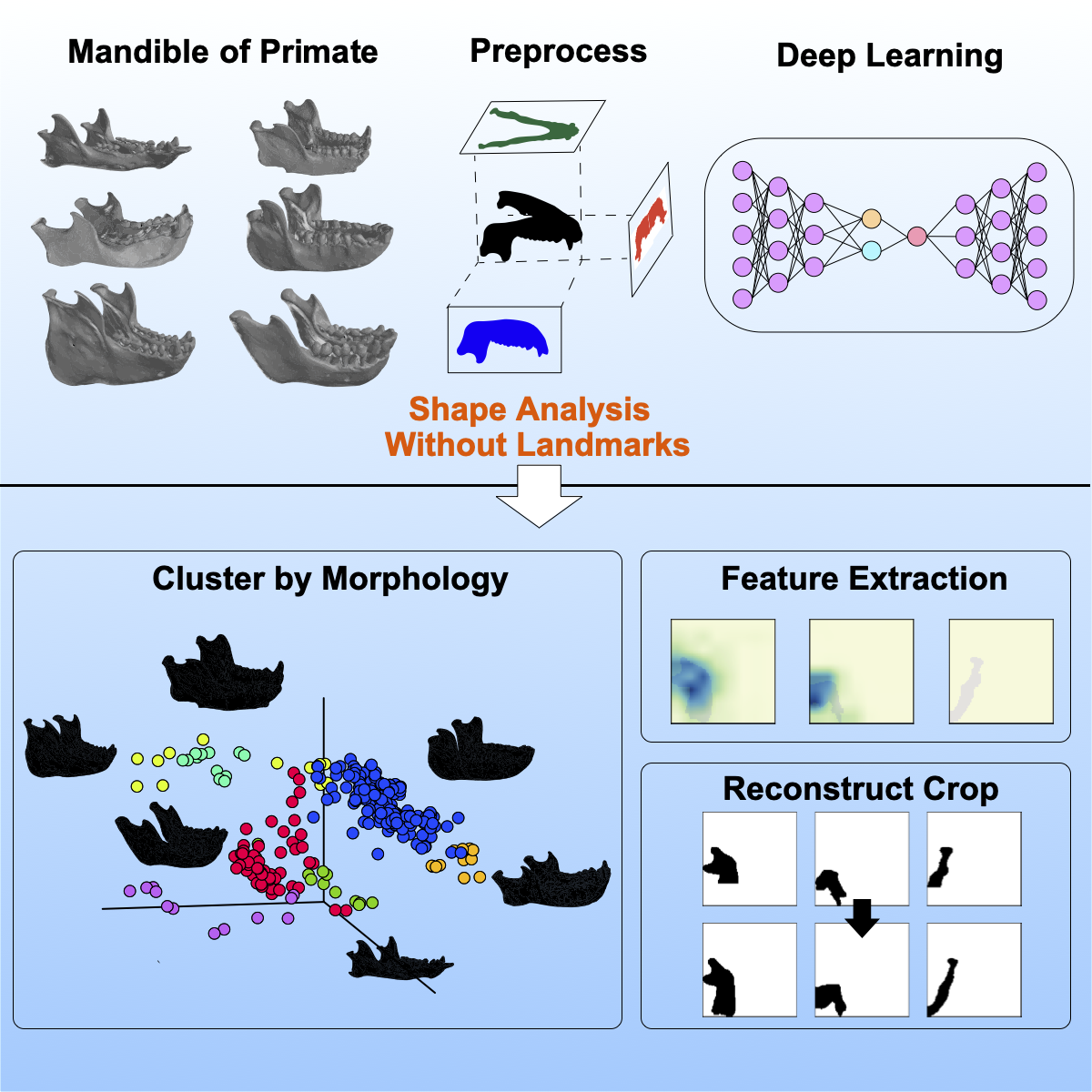
Deep learning based morphological feature extraction. Landmark-free and robust to missing data.
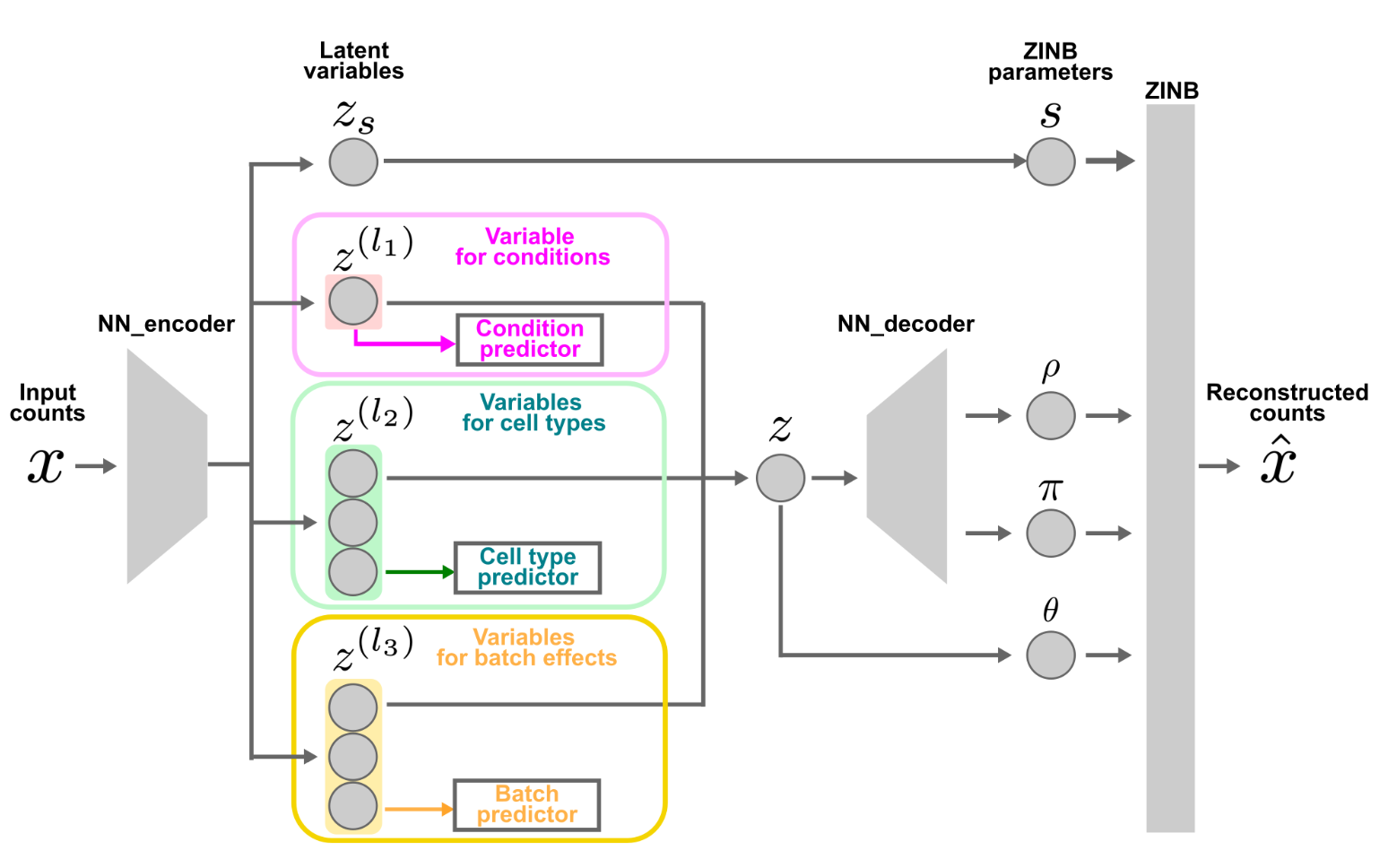
A batch-effect removal method for single-cell transcriptomics.
Quantification of social stress using mathematical models, including energy landscape analysis and Bayesian inference.
A deep learning platform for multi-animal behavioral analysis of Drosophila larvae.
Evolution & Development (March 2024)
npj Systems Biology and Applications (July 6, 2023)
bioRxiv (April 16, 2025)
Preprint (May 19, 2022)
Japan Society for Industrial and Applied Mathematics Annual Meeting 2024 (September 16, 2024)
Online Seminar Series "Future of Evolutionary Biology with AI" (March 9, 2024)
Feb 20, 2026
Principles for Creating Life Functions through Evolutionary Information Assembly (Jan 13, 2026)
1st Systems Behavioral Science Workshop (May 30, 2025)